 Hova
HovaShort answer: yes. Muscle doesn't know whether resistance comes from a machine or from your own bodyweight — it responds to tension, effort, and steady progression. You can build a genuinely strong, muscular body at home. You just have to train it the right way.
The one rule that matters: progressive overload
Muscle grows when you ask it to do a little more than last time. In a gym that usually means adding weight. At home you have just as many levers — you just push different ones:
- More reps — add one or two to each set over the weeks.
- Slower tempo — a 3-second lowering phase makes a push-up far harder than a fast one.
- Harder variations — knee push-ups → full → feet-elevated → archer.
- Less rest — the same work in less time raises the challenge.
What you actually need
Less than you think. Your bodyweight covers the essentials. A pair of adjustable dumbbells or a set of resistance bands widens the exercise pool and makes overload easier, but they're optional — plenty of people build a strong physique with floor space alone. (New to it? Start with our no-equipment beginner guide.)
A simple home approach
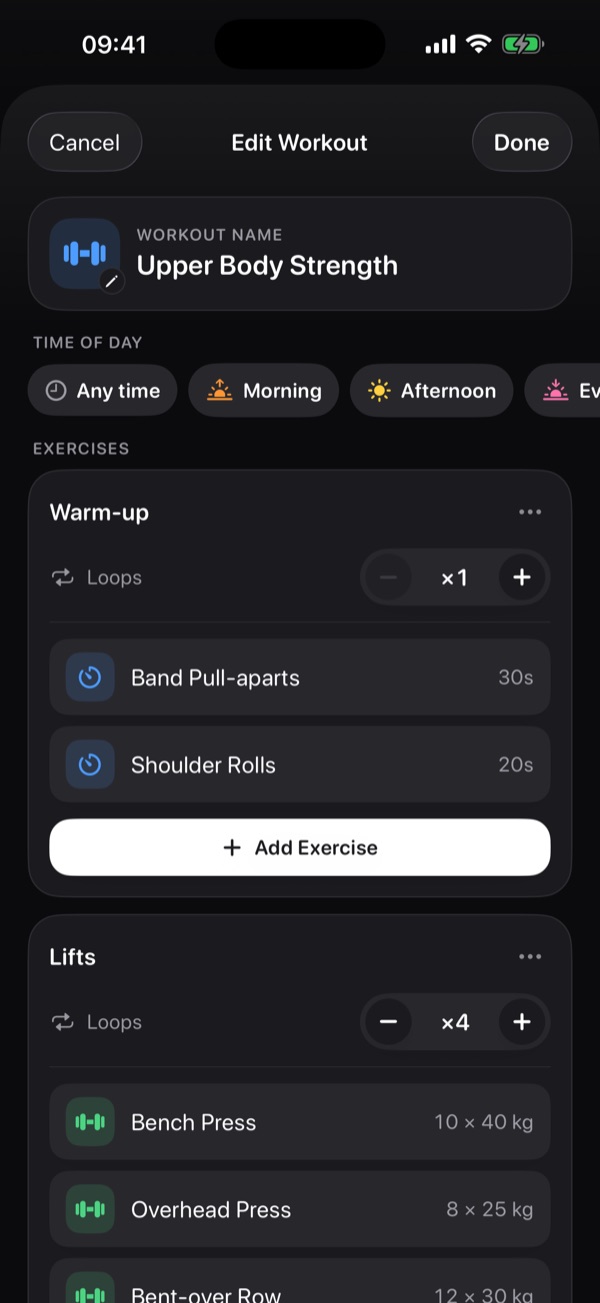
Train each muscle group two to three times a week, pick 4–6 exercises per session, and do 3–4 sets of each, stopping a rep or two short of failure. The key is repeating the same movements often enough to actually progress them — which is where most home training falls apart. It helps to build the session once and reuse it, adjusting the numbers as you get stronger.
Track it, or you'll stall
Progressive overload only works if you know what you did last time. Keep a record of your reps and weights so each session beats the last, and use a 1RM calculator to gauge strength as you add load. Pair that with sensible rest and pacing and the progress takes care of itself.
A gym makes progression convenient. It was never what made muscle grow.
Build and track home workouts with Hova
Create custom sessions with reps, weighted sets, tempo, and rest — then let Hova guide you through them, hands-free, and track every one.